


Bringing a new baby into the world is one of the most beautiful transitions you’ll ever experience—but it also comes with questions, challenges, and an overwhelming number of “must-have” lists. BreastFeeding is often at the center of this journey.
For some moms, breastfeeding feels natural right away. For others, it’s filled with trial, error, and learning. And that’s okay—because there’s no single “right” way to nourish your baby. Every feeding journey is unique.
That’s why breast pumps have become such an important tool for modern moms. They can help establish and maintain milk supply, provide flexibility when you return to work, and give partners or family members the opportunity to share in feeding. Most importantly, they offer moms freedom—allowing you to care for yourself while caring for your little one.
This ultimate guide dives into the benefits of breastfeeding, the challenges moms face, the science behind breast pumps, and how to choose the best pump for your stage of motherhood. We’ll also compare different pump types, share sample pumping schedules, and highlight tools like Momcozy’s wearable pumps, which are designed for comfort and convenience.
Whether you’re preparing for your first baby or you’re an experienced mom looking for better pumping options, this article will give you the knowledge, strategies, and tools to feel confident and supported on your journey.
The Benefits of Breastfeeding
Every mom has heard the phrase “breast is best”—but the truth is, feeding your baby is about finding what works best for you and your family. Still, it helps to know why breastfeeding is recommended when it’s possible, because the benefits are pretty incredible.
👶 For Baby:
- Tailored nutrition: Breast milk literally changes composition to meet your baby’s needs—more watery on hot days, fattier during growth spurts. Your body is constantly adjusting for them.
- Immunity boost: Antibodies in breast milk help protect against illnesses like colds, ear infections, and even allergies later in life.
- Healthy development: Some studies link breastfeeding with higher IQ scores and better gut health thanks to probiotics naturally present in milk.
💛 For Mom:
- Healing & recovery: Breastfeeding helps your uterus contract and can reduce postpartum bleeding.
- Long-term health: Moms who breastfeed have a lower risk of breast and ovarian cancer, as well as Type 2 diabetes.
- Bonding time: Feeding creates a rhythm of closeness and skin-to-skin contact that calms both you and baby.
- Convenience: Always ready, always the right temperature, and completely free.
Myth Busters: Breastfeeding Edition
There’s so much advice (and pressure) floating around about breastfeeding. Here are a few myths worth clearing up:
- “Breastfeeding is always easy and natural.”
→ Not true. While some moms and babies click right away, many need time, patience, and sometimes professional help (like a lactation consultant). Struggling at first doesn’t mean you’re failing—it’s completely normal. - “You can’t get pregnant while breastfeeding.”
→ This is a common misconception. While exclusive breastfeeding can sometimes delay ovulation, it is not reliable birth control. If avoiding pregnancy is a priority, you’ll still need contraception. - “More pumping = more milk.”
→ Yes and no. Frequent milk removal does help increase supply, but over-pumping can also cause sore nipples, engorgement, or even a dip in supply if your body gets stressed. Balance matters. - “Formula is a failure.”
→ Absolutely not. Formula is safe, nourishing, and life-saving for many families. Whether you breastfeed, pump, use formula, or combine methods—what matters is a happy, healthy baby (and mom).
Challenges Moms Face with Breastfeeding

Even though breastfeeding is “natural,” it doesn’t mean it comes naturally. So many moms are surprised when things don’t go smoothly right away—but you are not alone. Here are some of the most common challenges, along with gentle solutions:
Latching Difficulties
Some babies struggle to latch properly, especially in the early days. A shallow latch can cause sore nipples, frustration, and even poor weight gain for baby.
Tips:
- Try different positions (football hold, side-lying, laid-back) to see what works best.
- A lactation consultant can help check tongue ties or positioning issues.
- Skin-to-skin before feeds often relaxes baby and improves latch.
💧 Concerns About Milk Supply
Worrying if your baby is getting enough is one of the top stressors for new moms. Sometimes supply dips due to stress, skipped feeds, or medical reasons.
Tips:
- Nurse or pump frequently—milk supply works on a “demand and supply” system.
- Stay hydrated and nourished; even small things like not eating enough can affect supply.
- Consider “power pumping” sessions to stimulate production.
😣 Soreness, Engorgement & Clogged Ducts
Full breasts can feel rock-hard and painful, and clogged ducts may lead to mastitis if not relieved.
Tips:
- Apply warm compresses before feeding or pumping to help milk flow.
- Gentle massage from chest toward nipple during pumping can help release clogs.
- Switch between breastfeeding and pumping as needed to keep breasts well-drained.
Returning to Work or School
One of the hardest transitions is returning to reality and leaving your baby not to mention on to of that you’ll have to figure out how to keep breastfeeding or pumping once you’re away from your baby.
Tips:
- Invest in a quality, efficient pump (double electric or wearable).
- Store milk safely using a cooler bag and ice packs.
- Know your rights—by law, most workplaces must provide break time and a private space (not a bathroom) for pumping.
🌟 Did You Know?
Breast milk actually changes based on how long you’re away from your baby and the time of day you pump.
- When you nurse directly, your baby’s saliva communicates with your body to adjust antibodies—customizing milk to their needs. Pumping still provides amazing immune protection, but that “customization” is less direct.
- Milk pumped in the morning has more cortisol, supporting alertness, while milk produced at night contains more melatonin to help babies sleep.
- If you go longer stretches between sessions, the first milk (called foremilk) is thinner and higher in water content, while the later milk (hindmilk) is richer in fat and calories.
✨ Takeaway: Pumping regularly helps keep your milk balanced and nutrient-rich—so your little one still gets everything they need, even when you’re apart.
💕 Emotional Struggles
Some moms feel guilt or sadness if breastfeeding doesn’t work out the way they hoped. Others experience anxiety about feeding or exhaustion from constant pumping.
Tip: Remember—you are doing an amazing job. Formula is safe. Pumping counts. Combo feeding counts. What matters most is that your baby is fed and you are cared for too.
Breast Pump Types
Choosing the right pump depends on your goals: Are you trying to build supply? Pump occasionally for flexibility? Or are you an exclusive pumper? Let’s break down each type in detail:
👐 Manual Pumps
- How They Work: Operated by hand, you create suction through a squeeze mechanism.
- Efficiency: Generally lower than electric pumps—output depends on your stamina and rhythm. Best for short sessions or occasional relief.
- Best Use: Travel, backup, or if you only pump once in a while.
- Pros: Inexpensive, portable, easy to clean, doesn’t need power.
- Cons: Tiring on the hands, slower, not realistic for building or maintaining a strong supply.
🔌 Single Electric Pumps
- How They Work: Small motor creates suction on one breast at a time.
- Efficiency: More effective than manual, but takes twice as long as a double pump. Not ideal for daily or exclusive pumping.
- Best Use: Moms who mostly breastfeed but pump occasionally (for a freezer stash or an outing).
- Pros: Affordable, compact, easier than manual pumping.
- Cons: Time-consuming, less efficient for boosting supply, not suited for work or frequent pumping.
⚡ Double Electric Pumps
- How They Work: Motor-driven suction on both breasts simultaneously. Hospital-grade or high-quality consumer models are designed to mimic baby’s sucking rhythm.
- Efficiency: The gold standard for milk output. Double pumping can increase yield by up to 18% and results in milk with higher fat content (better nutrition for baby).
- Best Use: Exclusive pumpers, working moms, or anyone serious about maintaining supply.
- Pros: Fast, efficient, best for establishing or increasing supply. Reliable for long-term use.
- Cons: Bulky, more parts to clean, usually requires a power source.
🤱 Wearable/Hands-Free Pumps
- How They Work: Compact, battery-powered pumps that fit inside your bra. Milk is expressed into small containers or bags attached to the unit.
- Efficiency: Excellent for convenience but slightly less suction power compared to hospital-grade double pumps. Often better once supply is established.
- Best Use: On-the-go pumping, multitasking, discreet use at work, caring for multiple kids.
- Pros: Portable, discreet, allows you to move around and pump at the same time. Great for mental health—no need to be “tethered.”
- Cons: Smaller milk capacity, less powerful suction, more frequent emptying. Not always ideal for building supply in the early weeks.
Depth Pump Comparison – Medela vs Spectra vs Wearables
Double-Electric Leaders: Medela & Spectra
Efficiency & Output
- Both Medela and Spectra offer double-electric systems, generally outperforming manual or single-electric pumps in volume and speed of milk expression.
- Studies show double pumping can yield up to 18% more milk and higher fat content compared to pumping each breast separately.
- Spectra models (like S1/S2) are praised for their gentle suction rhythms that mimic a natural nursing pattern. They’re quiet and allow wide adjustment controls, making them feel very comfortable.
- Medela’s Pump in Style with MaxFlow uses proven two-phase expression technology—the “stimulation” and “expression” modes help speed milk release, and it increases output by nearly 12%.
Portability & Convenience
- Spectra S1 includes a rechargeable battery, making it convenient for on-the-go pumping. It’s slightly heavier though (around 3 lbs) compared to Medela’s lighter and more compact design (~1.18 lbs).
- Medela’s Pump in Style can run on AA batteries using an adapter, offering some flexibility if you’re away from outlets.
Hygiene & Maintenance
- Spectra uses a closed system, meaning milk doesn’t backflow into the tubing—this prevents mold and keeps components cleaner.
- Medela’s system is an open system. While efficient, it can allow milk into tubing, requiring more cleanup and attention to parts.
Wearable Pumps (e.g., Momcozy, Elvie, Willow)
Convenience & Flexibility
- Wearables are hands-free and discreet—great for multitasking or pumping at work or in public. Some models include smart app integration for session tracking.
- Their portability and minimal profile provide emotional and lifestyle benefits that double-electric pumps cannot.
Output & Limitations
- Though more flexible, wearable pumps typically lack the suction power of double-electrics, leading to slower milk release and potentially lower yield—especially for new moms building supply.
- Battery life varies—many models last only 2–3 sessions before needing recharge.
Quick Comparison Table
| Pump Type | Suction Strength | Milk Output | Portability | Comfort & Quiet | Best For |
|---|---|---|---|---|---|
| Double Electric | High | Highest | Medium | Moderate | Supply building & exclusive pumping |
| Medela (MaxFlow) | Moderate–High | Strong | High (batteries) | Moderate | Good all-rounder |
| Spectra (S1/S2) | High | Strong | High (S1 only) | Quiet | Frequent pumpers & night use |
| Wearable pumps | Lower | Moderate | Very High | Very Quiet | Multitasking, travel-friendly moms |
Best Choice Based on Your Stage
- For full supply-building or exclusive pumping: Choose double-electric pumps (Spectra or Medela) for their efficiency and output.
- On-the-go or multitasking: Incorporate a wearable pump—ideal for mobility, though best used in tandem with a traditional pump.
- As you gain experience: Start with a double-electric, then supplement with wearable options when convenience becomes a priority
How to Choose the Right Breast Pump
With so many options, it’s easy to feel overwhelmed. The best pump isn’t necessarily the most expensive one—it’s the one that fits your lifestyle, comfort, and goals. Here’s a step-by-step guide to making the right choice.
1. Ask Yourself the Key Questions
- How often will I be pumping?
- If you’re exclusively pumping or returning to work, a double-electric pump (like Spectra or Medela) is your best bet.
- If you’re pumping occasionally, a single-electric or even a manual pump may be enough.
- Do I need to pump on the go?
- If you’ll be multitasking or pumping at work without much privacy, a wearable pump (like Momcozy or Elvie) makes life much easier.
- What’s my budget?
- Manual pumps: $30–$60
- Double-electrics: $150–$400
- Wearables: $200–$350
Keep in mind: many insurance providers cover double-electric pumps—worth checking before you spend out of pocket.
- Do I have support at work/home?
- If you have time and privacy, a plug-in electric pump is fine.
- If not, a wearable gives you flexibility without sacrificing your break time.
2. The Overlooked Detail: Flange Fit
One of the biggest reasons moms feel pumps “don’t work” is because of flange size.
- What it is: The flange (or breast shield) is the funnel-shaped part that fits over your nipple.
- Why it matters: If it’s too big or too small, it can cause pain, low milk output, or clogged ducts.
- How to measure: Your nipple should move freely in the tunnel without rubbing, but not pull in too much areola. Most brands (including Momcozy and Spectra) offer multiple sizes.
💡 Tip: A properly fitted flange can increase output by 30–40% compared to the wrong size.
3. Transitioning as Your Needs Change
- New Moms / Establishing Supply:
Start with a double-electric pump. It’s the most reliable for stimulating and maintaining supply in the early months. - Once Supply is Established (6–12 weeks in):
Add in a wearable pump for convenience—perfect for multitasking or quick sessions. Keep the double-electric as your “main pump” for full drainage. - Experienced Moms / Occasional Pumping:
As your routine stabilizes, you might rely more on a wearable for daily flexibility, with a manual pump as a backup for travel or emergencies.
4. A Quick Rule of Thumb
- If your goal is most milk, fastest → Double-electric (Spectra or Medela)
- If your goal is freedom and multitasking → Wearable (Momcozy, Elvie, Willow)
- If your goal is just occasional pumping → Manual or single-electric
Supply-Building Techniques for Pumping Moms
One of the most common worries new moms face is: “Am I making enough milk?” The good news is that your body is designed to respond to demand. With the right strategies, most moms can boost and maintain their supply successfully.
1. Timing & Frequency
- Early weeks (0–12 weeks): Pump or nurse every 2–3 hours, including at night. This is when your supply is being established. Skipping sessions early on can send the signal to your body to produce less.
- After supply stabilizes (3+ months): Many moms can stretch to every 3–4 hours during the day and one longer stretch at night while maintaining supply.
- Golden window: Prolactin levels (milk-making hormone) peak between 1 am – 5 am. Pumping at least once during this window can significantly help output.
2. Power Pumping (Milk Supply Bootcamp)
Power pumping mimics cluster feeding, which tells your body “baby is extra hungry—make more milk.”
Typical Power Pumping Session (60 minutes):
- Pump 20 minutes
- Rest 10 minutes
- Pump 10 minutes
- Rest 10 minutes
- Pump 10 minutes
Doing this once a day for 3–5 days can trigger noticeable increases in supply.
3. Comfort Boosters
- Warm compresses or a heating pad on breasts before pumping → encourages letdown.
- Breast massage/compression during pumping → helps drain milk ducts fully.
- Proper flange fit → the wrong size = pain + less milk.
4. Hydration & Nutrition
- Hydration: Aim for at least 80 oz (about 10 cups) of water daily. Add electrolytes if you sweat or exercise.
- Calories: Producing milk can burn 400–500 calories/day. Make sure you’re eating enough.
- Galactagogues: Foods and herbs like oats, flaxseed, fennel, and fenugreek may help some moms, though evidence is mixed. Think of them as boosters, not magic fixes.
5. Common Mistakes That Lower Supply
- Skipping pump/nursing sessions frequently.
- Using suction that’s too strong (causes stress rather than stimulating flow).
- Staying in the wrong flange size.
- Not fully emptying breasts regularly.
Accessories That Make Pumping Easier
Sometimes it’s not just the pump—it’s the little extras that make your life smoother. Here are the accessories worth considering:
- Hands-Free Pumping Bra – Lets you multitask during pumping sessions (answer emails, fold laundry, or just scroll TikTok without holding bottles).
- Breast Milk Storage Bags – Pre-sterilized, freezer-safe, and space-efficient compared to bottles.
- Cooler Bag + Ice Packs – Essential for transporting milk safely when you’re at work or on the go.
- Sterilizer or Microwave Steam Bags – Quick ways to sanitize bottles and pump parts.
- Pump Cleaning Wipes – Lifesavers for travel or when you don’t have access to a sink.
- Nursing Cover (Optional) – If you want extra privacy while pumping in public spaces.
These may seem small, but they add up to big peace of mind in your daily routine.
🛠 Troubleshooting & Tips
Even with the right pump and routine, challenges pop up. Here’s how to handle common ones:
Low Output
- Pump more frequently instead of just increasing suction.
- Check flange fit—this alone can improve supply by up to 40%.
- Try a power pumping session for a few days.
Clogged Ducts
- Apply heat before sessions.
- Massage firmly in the direction of the nipple while pumping.
- Switch baby’s position if nursing, or try dangle-feeding.
Pain or Discomfort
- Pain should not be part of regular pumping. Re-check flange size.
- Reduce suction strength—sometimes gentler suction yields more milk.
- Use nipple cream if needed to prevent cracking.
🛒 Recommended Pumps
When choosing a pump, here are the standouts worth considering:
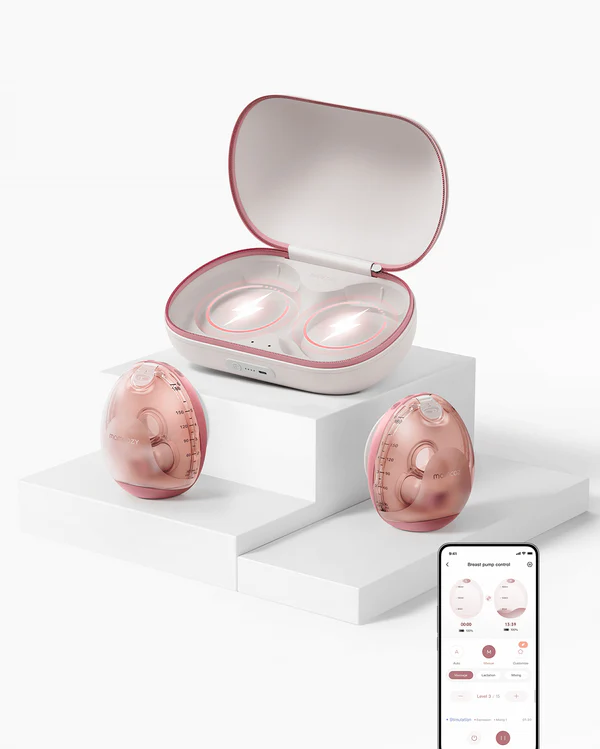
- Momcozy Wearable Pump (Affliate Pick) –The Momcozy Air 1 Ultra-Slim Breast Pump is designed for modern moms who prioritize discretion, efficiency, and convenience. Shop Momcozy Air 1 Ultra-slim Breast Pump here by clicking the image below
- Spectra S1/S2 Double Electric – Gentle, efficient, hospital-strength suction with a closed system for hygiene.
- Medela Pump in Style with MaxFlow – Compact, effective, and trusted by hospitals and parents alike.
- Manual Pump (Any brand) – Great to have as a backup or for travel.
👉 Affiliate Note: Be sure to link each product using your affiliate links so you earn commission whenever a mom clicks through and buys.
🍼 Storing & Handling Breast Milk Safely
Keeping your milk safe is just as important as pumping it. Here’s a quick guide:
- Room Temperature (up to 77°F): Safe for 4 hours
- Refrigerator (40°F or below): Up to 4 days
- Freezer (0°F or below): 6–12 months (best by 6 months for freshness)
💡 Pro Tip: Always label bags with the date. Store flat to save freezer space, then stand them upright once frozen.
💕 Final Thoughts
Breastfeeding and pumping can be one of the most rewarding—and sometimes overwhelming—parts of motherhood. Remember: you don’t need to do it perfectly, and you don’t need to do it all at once.
Start with the basics: a reliable pump, a good routine, and support when you need it. Over time, you’ll figure out what works best for you and your baby.
And don’t forget: a fed baby and a cared-for mama is always the goal. Whether you’re nursing, pumping, formula feeding, or doing a mix of it all—what matters most is the love you pour into your little one every day. 💛
Explore more gentle, intentional parenting tips at Sunnie Babies ☀️



One comment on “The Mom’s Guide to Breastfeeding & Pumping”